

Time 2.0
You don't know what you and AI are capable of (and neither does AI - yet)

Thought is movement.
– A Thousand Brains, Jeff Hawkins
One bit of bad news about using AI. Two bits of good.
Bad: If you feel behind, you’re right. You’re probably not moving fast enough.
Good #1: And you’re definitely not alone. Even the best AI minds in the world feel that way.
Good #2: You can do something about it just by starting to think differently about that challenge.
Most organisations are behind the curve. The majority of people haven’t moved yet. You may not be as far behind as you think — but here’s the uncomfortable truth: if you’re a little behind now, you’ll be way behind soon.
A scene from one of my favourite films, Interstellar, evokes how it feels to be working with the latest generative AI tools and then talk to friends and family (and clients) who aren’t yet.
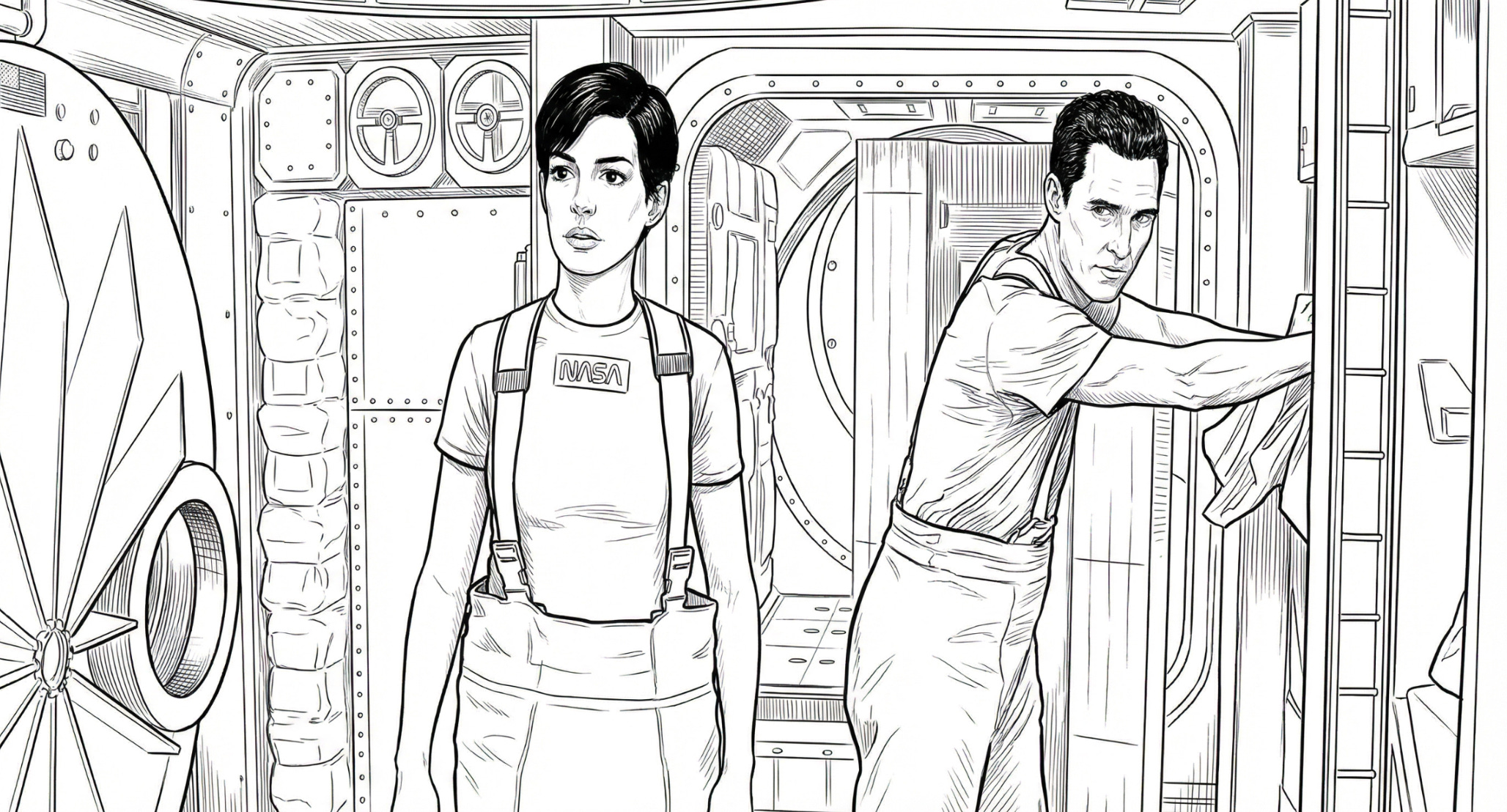
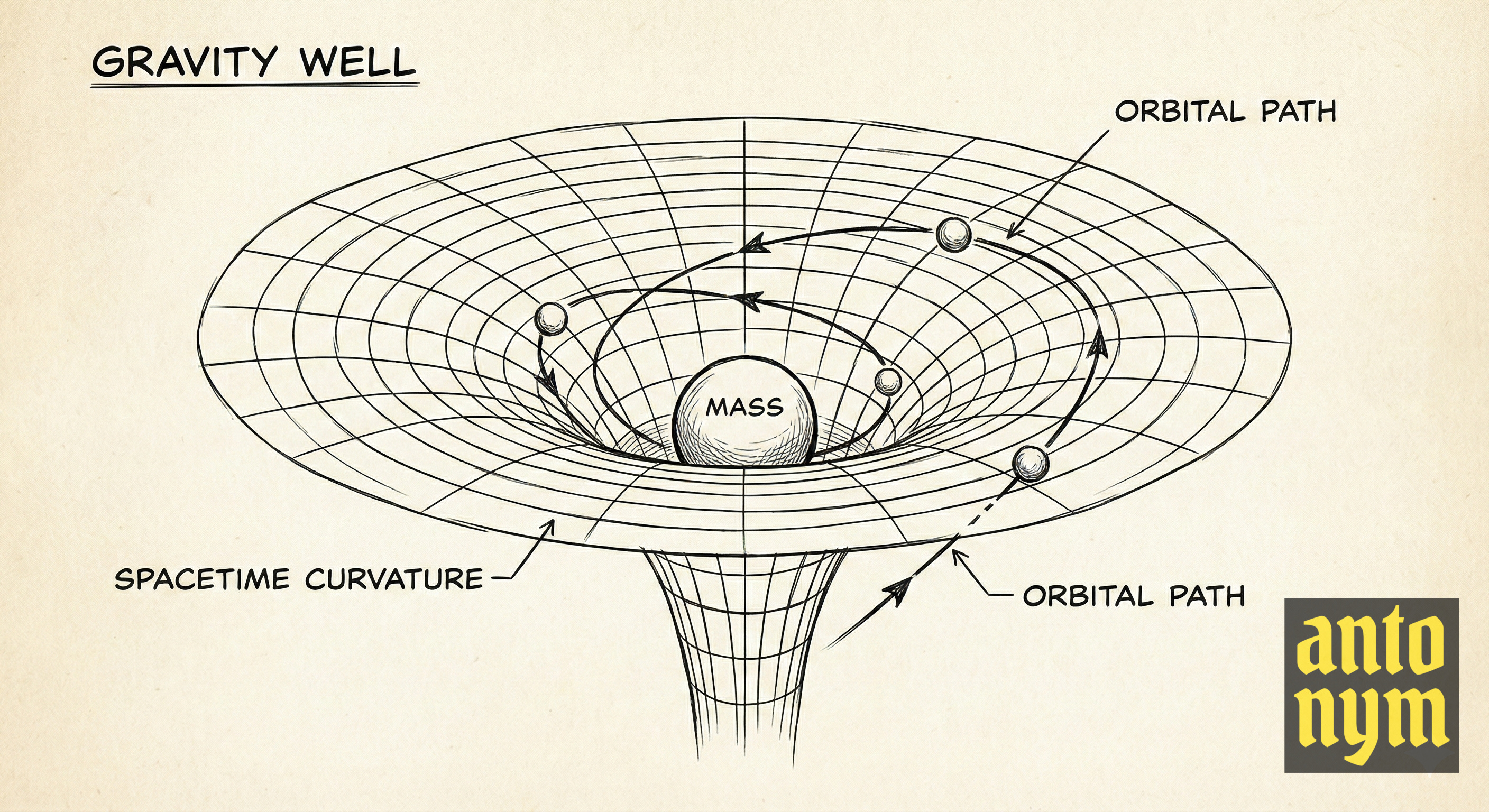
In the Miller’s world scene, an hour on the surface was seven years back on the ship in orbit? That’s roughly what’s happening with AI adoption. One team spends a quarter deliberating. Another team ships, learns, adjusts, ships again. The gap between them isn’t linear. It’s gravitational. A small delay becomes a massive distance, fast.
The point of the analogy isn’t just about speed. I’m not talking about feeling superior or ahead, more that we want other people to start moving faster to join us. It’s also very hard because “Show, don’t tell”, seems to be a hard rule in helping others understand new uses of AI systems.
I can hear people who might feel left behind shouting: “Interstellar? Got it. Nice analogy, Antony - but what do we do about it?”
To put it another way: “Where’s our spaceship. I’m already using chatgpt and it feels more like a moon buggy, mate!”
The art of the possible 2.0
Well, it may be enough to start thinking differently about time and what’s possible.
Here’s a practical example. Despite the weekly – daily! – progress we saw in our company with AI use, as we shut down for Christmas last year, my colleagues and I were still paranoid we weren’t moving fast enough. There was a question hanging in the air: “How do we go faster?”
We’d spent a quarter or so trying to prepare to accelerate growth in a traditional way – getting operating systems tightened up, bringing in specialists in tech and project management to make us ready to scale faster. But while there was undeniable progress we didn’t feel ready to really accelerate; something was missing.
In January we decided to change the rules from the off, beginning with a mantra about time: “A day is a week, a week is a month, a month is a quarter.”
We had been working to quarterly goals (OKRs) with updates on progress against projects after each week or two week sprint. So we changes OKRs to a monthly cycle. Q1 goals became January goals. January targets became week one targets. (Actually we renamed OKRs QKRs - making the objectives into questions, so “hit this goal” becomes “how far toward or beyond this goal can we get?”
It was forcing function – a way to find out how fast we could actually go. And it bloody worked! Is working. My personal experience was this. I’d committed to a goal of turning three years of work on AI literacy and training, into a useful curriculum database and structure.
At the end of week three in January I’d not made much progress and part of me – the one with the old framing of what’s possible – thought “this isn’t going to happen”. How embarrassing. In the first month of the new ethos I was going to prove myself very wrong and everyone would know.
Perhaps in the old way of doing things, I would have pulled a heroic all-nighter and delivered it along with a clear message to my colleagues that overwork was the way to victory. Instead I headed into the problem and started breaking into a brief, gathering data and plotting the process to create the thing I’d promised. Two and a half hours later it was done. Several agents had fanned out across our files, brought together our ideas, data, with insights from instructional design, adult learning, data science and information architecture and - boom - I had my database. One week ahead of schedule. A failure-to-be turned triumph. I added a course design generator to it, for good measure - one that creates a first draft of courses designed for different levels of experience, complete with slides, facilitator notes and handouts.
This experience was echoed among my colleagues too, including a new website platform migration which would have taken months before, simply because it would have not won its way to the top of to-do lists long enough to survive the necessary steps from doing to done.
Month 2.0
Month two (aka February) is already different from month one, partly because of insisting on the use of our in-house process for starting any project – we call it The Helix, more on this later. But also because the various agents we are working with have been learning too.
AI systems are like us – trained on the past and already out of date on some key assumptions. If you do project planning for a software build, for instance, they plan based on their knowledge of how long these take. Often they say 6 - 8 weeks and with the right approach you can finish in half a day. They don’t know that they don’t know this (and we often forget too).
My mind makes plans based on years of how time worked with projects. Now it is changing – slowly, as humans minds do – to expect a different cadence.
I think that this change isn’t as simple as changing the rules. I believe our team culture at Brilliant Noise of high trust and hyper-flexible working patterns, manifested as four-day working weeks and self-management policies, for instance, allow us to try this, allow me as a leader to say “we’re going to deliver four times faster”, and not just sound like a deluded maniac trying to work people into early burnout. There’s enough trust in our system for us to give it a go.
So, we replaced the question “should we move?” It’s “have we escaped the gravity well of how things used to work?”
Most haven’t. Not even close.
Three Pillars: Speed, Reframing, Recursivity
I’ve been thinking about what actually matters right now — not in the abstract, but in the work we’re doing at Brilliant Noise, tested against real clients and real deadlines. It comes down to three things.
[TO BE CONTINUED?]
Look, it’s nearly 10:00. I post these for free and I’ve done 1100 words and there’s still half of my outline to go. There’s just too much to say and I’m going to have to say the rest another time. I’m going to go and walk my dogs and have a nap. Leave a comment if you want the raw outline and I’ll send it to you or post it in the comments. But it would ruin the flow and bring unsupervised AI copy into a human written space to just throw it out.
Bottom line: The best day to start accelerating your AI literacy and learning what is possible is today, and the first challenge is to get over the idea that there’s not enough time!
Thanks for reading
Cheers
Antony
This -> "What if AI strategy isn’t a project but a permanent learning posture? Most organisations treat AI as a tool to acquire. Something with a start and end date. But what changes when leadership models continuous relearning — when the question shifts from “how do we implement AI?” to “how do we stay current with what’s possible this month?”
Everyone needs to learn from each other in organisations. Most use of AI is siloed, when it should be shared.
Raw outline please 😀